
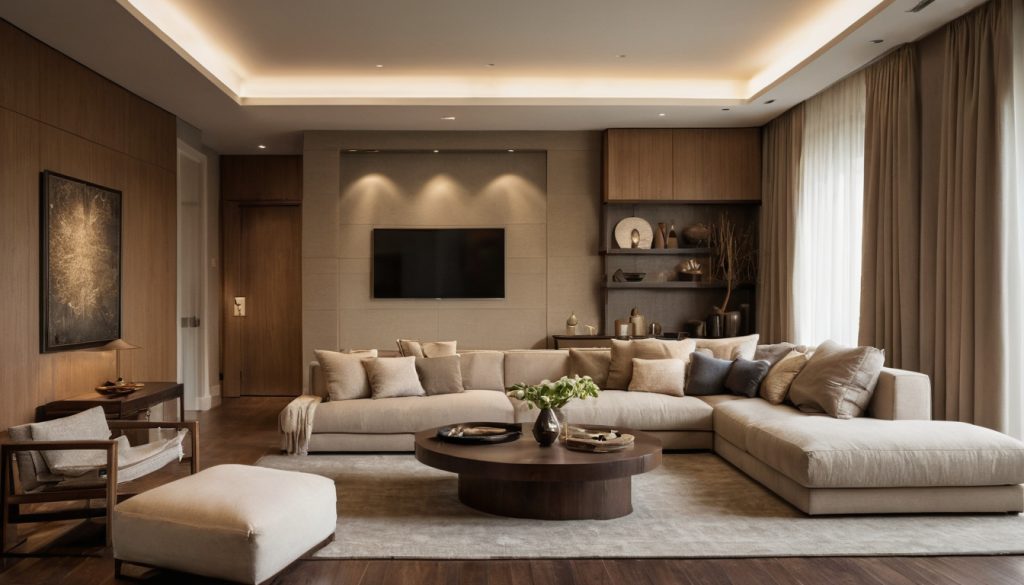
A living room can seat eight on paper and still serve only four comfortably once walkways, table reach, and sightlines are tested. The mistake is buying the photogenic sofa before proving that people can enter, sit, talk, watch, reach, and leave without negotiating the furniture.
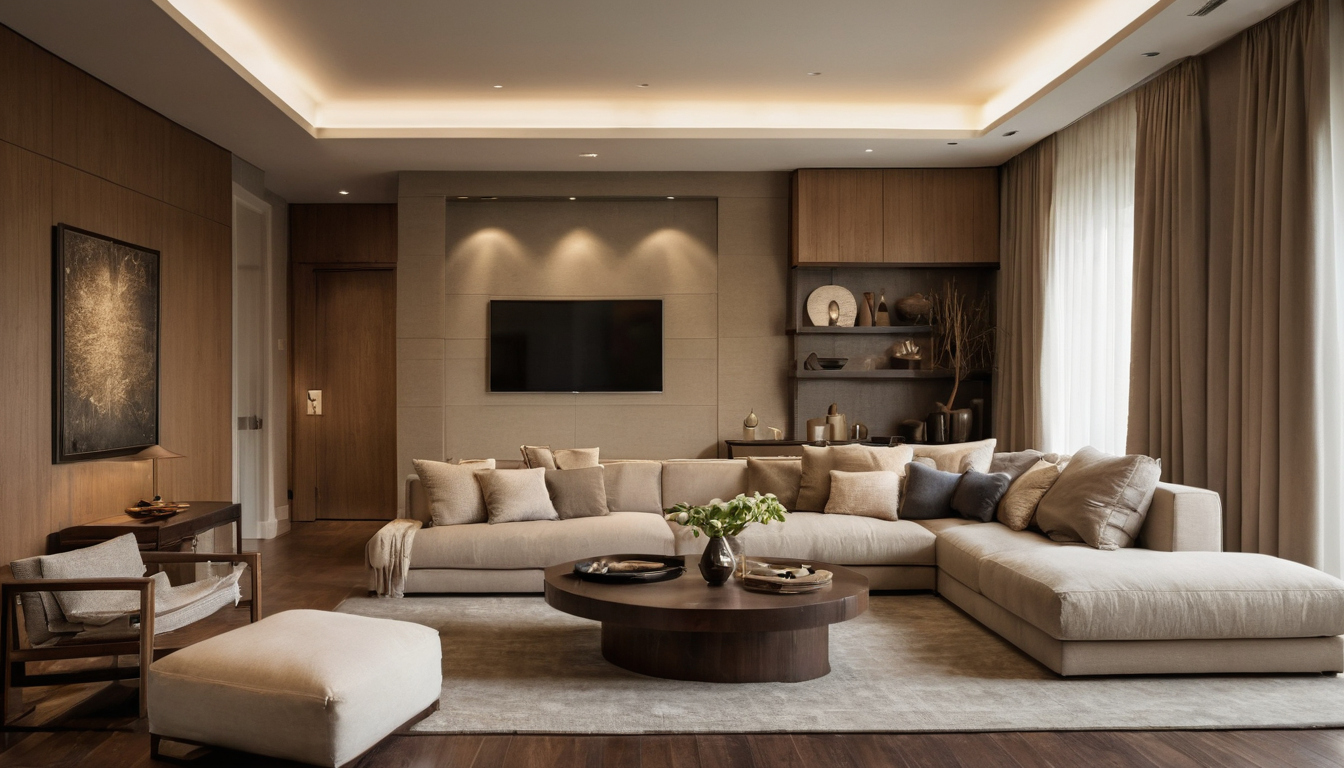
Living Room Furniture Plans That Make Luxury Seating Comfortable, Not Just Photogenic shown as a planning reference for layout, scale, and material decisions.
A luxury living room furniture plan should start with people, not with the sofa
A luxury living room furniture plan works when users, hosting style, room shape, views, and media needs are fixed before furniture is chosen. The best sofa becomes a poor purchase if it blocks movement, isolates guests, or leaves every drink surface out of reach.
What should be measured before choosing living room furniture?
The first drawing should test use, not taste. A formal salon may need upright chairs for conversation. A family lounge may need deeper seats and washable upholstery. An open-plan villa living room needs zones that do not drift into dining circulation. A double-height room needs visual weight. A small luxury apartment needs fewer pieces with better proportions.
- Wall lengths: finished wall to finished wall, including recesses, columns, radiators, and built-ins.
- Openings: door swings, sliding panels, window drops, terrace access, and fireplace openings.
- Ceiling height: standard, double-height, sloped, or coffered areas.
- Focal points: views, fireplace, media wall, art wall, and the direction guests face.
- Services: outlets, floor boxes, HVAC grilles, speakers, switches, and control panels.
- Rugable area: floor area left after door swings, hearths, and walkways are protected.
- Delivery route: lift doors, stair turns, corridor widths, apartment doors, villa gates, and ceiling pinch points.
A scaled plan matters for custom, imported, and premium retail furniture because deposits, freight, storage, and return limits turn a wrong dimension into a costly correction.
Comfortable living room seating depends on clear circulation, conversation distance, and table reach
Comfortable luxury seating depends on the space between people, tables, walkways, and focal points. Every main seat should allow conversation, let a guest stand without squeezing, and provide access to a surface for drinks or personal items.
What clearances should a living room furniture plan protect?
Main circulation should usually hold 30 to 36 inches through or around the seating group where the room allows it. This protects routes from an entry door to a terrace, dining area, stair, bar, or powder room.
Secondary access can often reduce to 24 to 30 inches behind occasional chairs, beside side tables, or along the back of a sofa when it is not the primary passage. Sofa-to-coffee-table spacing should usually sit around 16 to 18 inches, close enough for reach but wide enough for knees and tray service.
How far apart should sofas and chairs be for conversation?
Conversation works best when seated faces are close enough to read expression without leaning forward. Opposing sofas or a sofa and lounge chairs often perform well at about 6 to 10 feet between seated people, measured from body position rather than from the outside edge of deep arms.
Large villas and double-height rooms can stretch this distance only when the plan adds support: a second seating island, upholstered pieces that absorb sound, lamps that lower the visual scale, and tables that break the void.
How should TV viewing change a luxury living room layout?
TV planning should adjust the seating group by screen size, viewing angle, glare, and priority. If the media wall is primary, the best seats need a direct viewing cone and enough distance that the screen feels immersive rather than tiring. If conversation is primary, the TV should not force every chair into a row.
The right seating group depends on whether the room is formal, family-focused, open-plan, or narrow
The right luxury living room layout depends on purpose. A formal salon needs balanced conversation, a family lounge needs flexible lounging and durable fabrics, an open-plan villa needs visual zoning, and a long rectangular room often needs two smaller groups instead of one stretched arrangement.
Which living room furnishing ideas work for a formal salon?
A formal salon should seat guests face to face. Two facing sofas work when the room is wide enough to protect circulation behind at least one sofa and still leave comfortable reach to a central table. In a tighter reception room, four lounge chairs around a square or round table can feel more generous than a large sofa that blocks the entry sightline.
Design seating capacity before selecting style. For four guests, use one sofa with two chairs or four lounge chairs. For six, use two facing sofas or one sofa with two chair pairs. For eight, add small ottomans or benches only if movement remains clear. For ten, two coordinated seating groups often serve better than one oversized circle.
Formal living room decor ideas also need service logic. Side tables should be reachable from end seats, the coffee table should not trap knees, and the entry view should show order rather than furniture backs. If the room leans traditional, classic Italian furniture in modern living rooms can work when proportions still allow conversation and movement.
Which living room furniture ideas work for a family lounge?
A family lounge should admit that people recline, watch media, move pillows, and bring snacks. A modular sectional is appropriate when the room has enough width for a main walkway outside it and enough depth for a coffee table or ottoman. A sofa with a chaise and two poufs suits smaller luxury apartments because the poufs can serve children, extra guests, or footrests without fixing the layout permanently.
Media-oriented U-shaped seating works only when the screen is the primary focal point and side seats still have acceptable viewing angles. Swivel chairs help because one chair can turn toward the television, fireplace, or conversation group.
How should open-plan and double-height living rooms be zoned?
An open-plan villa room needs anchors because loose furniture can look undersized on a large floor. Rugs should define each seating island, console tables can finish sofa backs facing circulation, and floor lamps or pendants should lower the perceived scale around people. In a double-height room, tall walls need vertical balance, but seating still belongs at human scale.
Private collection displays require another layer of planning. The National Park Service Museum Handbook provides guidance for collections preservation, documentation, access, and use, which is useful when a living room also functions as a private gallery.
Luxury sofas and chairs should be specified by depth, height, cushion support, and fabric durability
A luxury sofa is comfortable only when its dimensions match the users and the room. Deep, low seating may photograph well but can be difficult for older guests; shallow upright seating may suit formal rooms but fail for lounging.
What sofa dimensions make luxury seating comfortable for real users?
Seat height controls how easily guests sit down and stand up. Formal sofas and lounge chairs often work best around 17 to 19 inches high, while very low lounge pieces can drop closer to 15 or 16 inches.
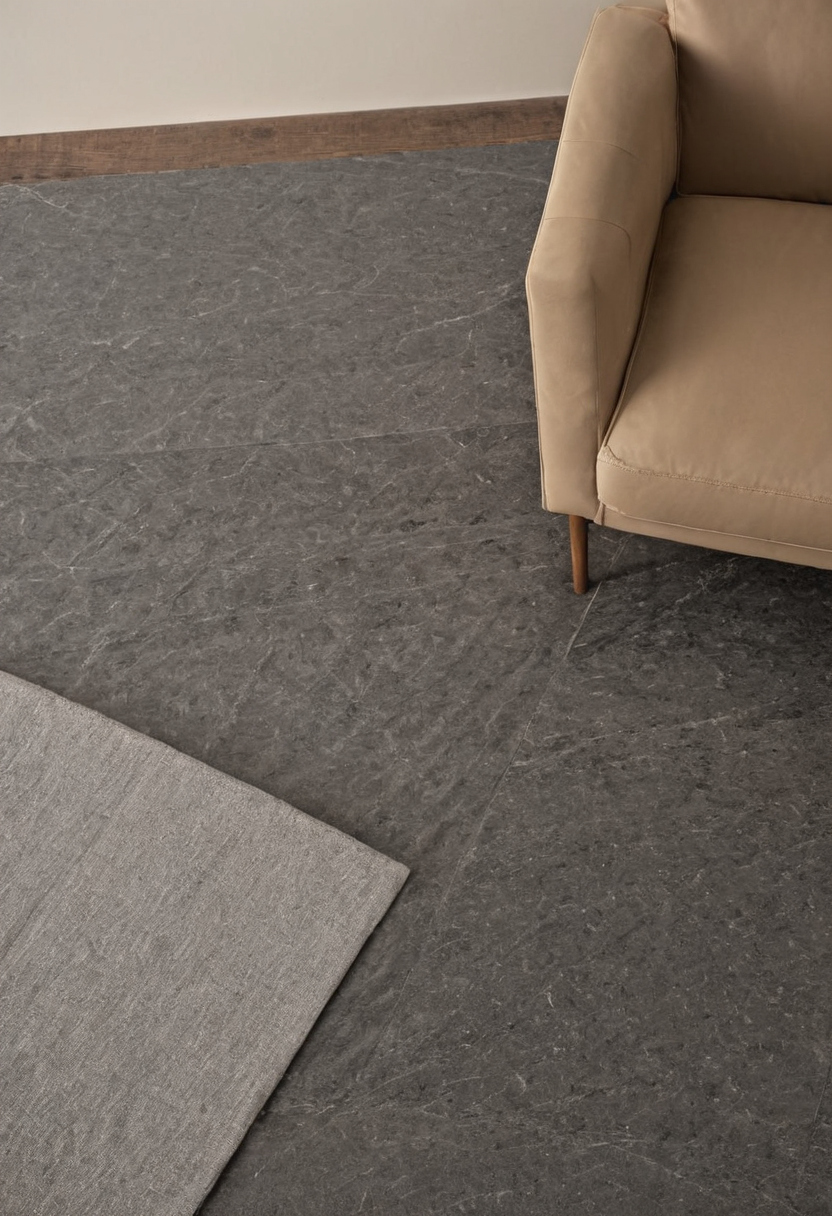
Luxury sofas and chairs should be specified by depth, height, cushion support, and fabric durability shown as an editorial reference for proportion and finish coordination.
Seat depth changes posture. A formal salon can use a shallower seat, often around 21 to 23 inches, with a more upright back. A family lounge can accept deeper seating, often 24 inches or more, if loose cushions, lumbar pillows, or a chaise position support the body.
Arm height and back height should follow use. Higher arms support reading and conversation, while lower arms open the sightline in an open-plan villa. A very low back can preserve a view, but it may not support long hosting unless cushion pitch and loose pillows compensate.
Which cushion and upholstery choices affect long-term comfort?
Cushion construction decides whether the sofa keeps its shape. High-density foam gives structure and cleaner lines. Down feels luxurious but needs frequent plumping. Feather-down blends soften the seat while retaining recovery. Fiber is soft but can compress. Spring cushions add resilience in high-use rooms.
Upholstery should be specified beyond color and texture. The Association for Contract Textiles performance guidelines evaluate fabrics through categories including abrasion, flame resistance, wet and dry crocking, colorfastness to light, and physical properties. Those categories matter with children, pets, sun exposure, dark denim, or frequent entertaining.
Material maintenance should match the household. Leather can scratch, velvet shows pressure marks, boucle can snag, linen blends wrinkle, and performance fabrics resist stains better in family rooms.
Rugs, coffee tables, side tables, and media walls should be sized as part of the seating plan
Rugs, tables, and media walls should be planned as functional parts of the seating layout. The rug defines the zone, the coffee table controls reach and movement, side tables serve secondary seats, and the media wall must align with sightlines, glare control, storage, and circulation.
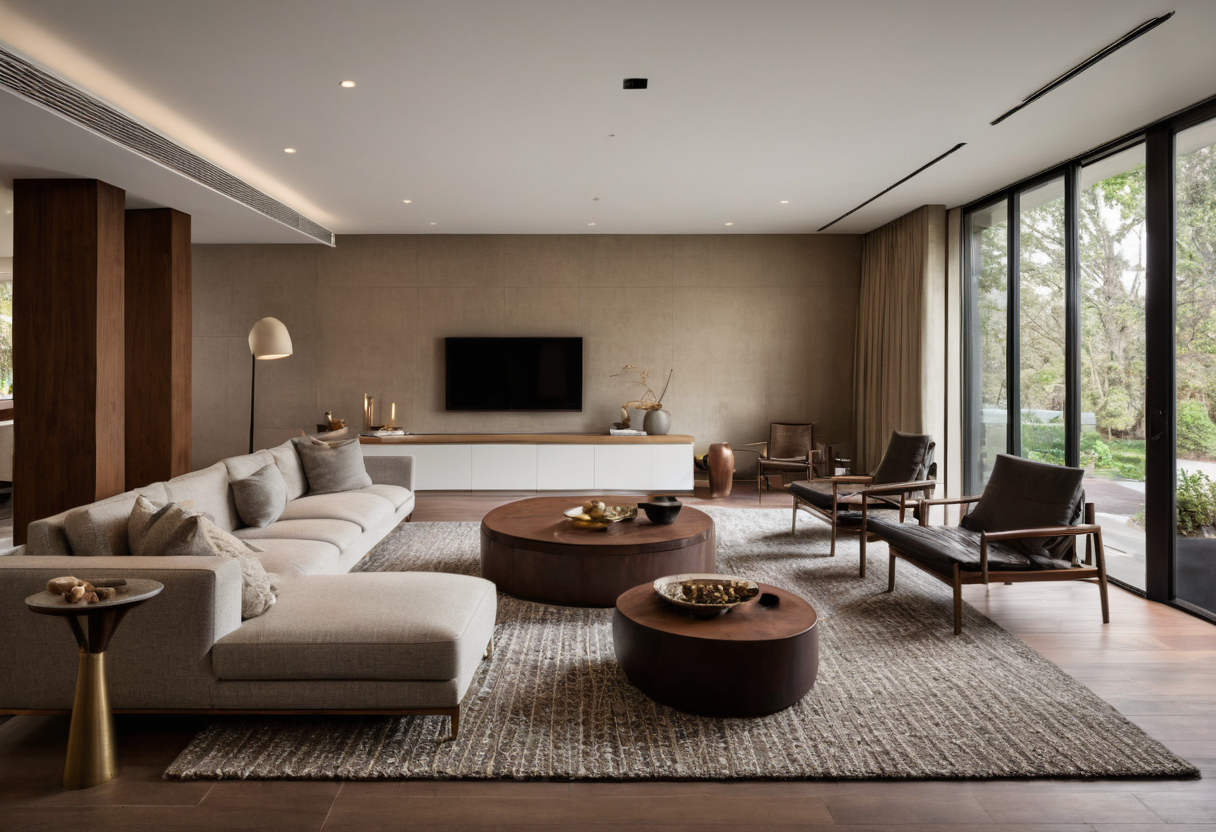
Rugs, coffee tables, side tables, and media walls should be sized as part of the seating plan shown with finish, fixture, and clearance relationships visible.
How large should a living room rug be under luxury seating?
A living room rug is too small when it decorates the center of the floor but fails to hold the seating group together. In a generous room, the strongest option is usually an all-legs-on layout. In tighter rooms, a front-legs-on layout can work if the rug extends under the front third of each major seat and reads as one continuous island.
A floating rug belongs only in constrained rooms where furniture must stay off the textile for door swing, radiator, or circulation reasons. Before ordering custom wool, silk, or oversized hand-knotted rugs, mark the rugable area and test whether chair legs catch the rug edge.
How should coffee tables and side tables be placed for hosting?
A coffee table should sit close enough for a guest to set down a glass without standing, while leaving enough knee and walking clearance. About 16 to 18 inches between sofa and coffee table works in many plans. Coffee table length often feels balanced at roughly one-half to two-thirds of the sofa length, provided circulation still works at the ends.
Side tables should serve seats the coffee table cannot reach. Tops usually work best near the height of the sofa or chair arm. Lounge chairs also need backs that support long sitting; Cornell University Ergonomics Web guidance states that backrests should support the lumbar region.
When should a media wall control the furniture layout?
A media wall should control the plan when television viewing, fireplace use, art display, or concealed storage is the dominant function. Screen size, seating distance, viewing angle, window glare, and speaker or cabinet depth should be resolved before sofas are ordered.
Built-in cabinetry also needs door, drawer, and service clearance. New media cabinetry, adhesives, coatings, and furniture finishes can affect indoor air quality; the U.S. Environmental Protection Agency states that volatile organic compounds are emitted as gases from certain solids or liquids.
Living room decor ideas should add comfort, acoustics, lighting, and service rather than clutter
Living room decor ideas should solve practical problems before adding objects. Lamps improve face-level light, cushions adjust posture, trays organize service, throws add thermal comfort, curtains soften acoustics, and art creates scale without occupying surfaces guests need.
Which living room accessories ideas improve comfort?
Accessory planning should start with the room’s irritations. A low-backed sofa may need firmer lumbar cushions. A stone coffee table may need a tray. A double-height room may need lined curtains, a thicker rug, and upholstered ottomans to reduce echo.
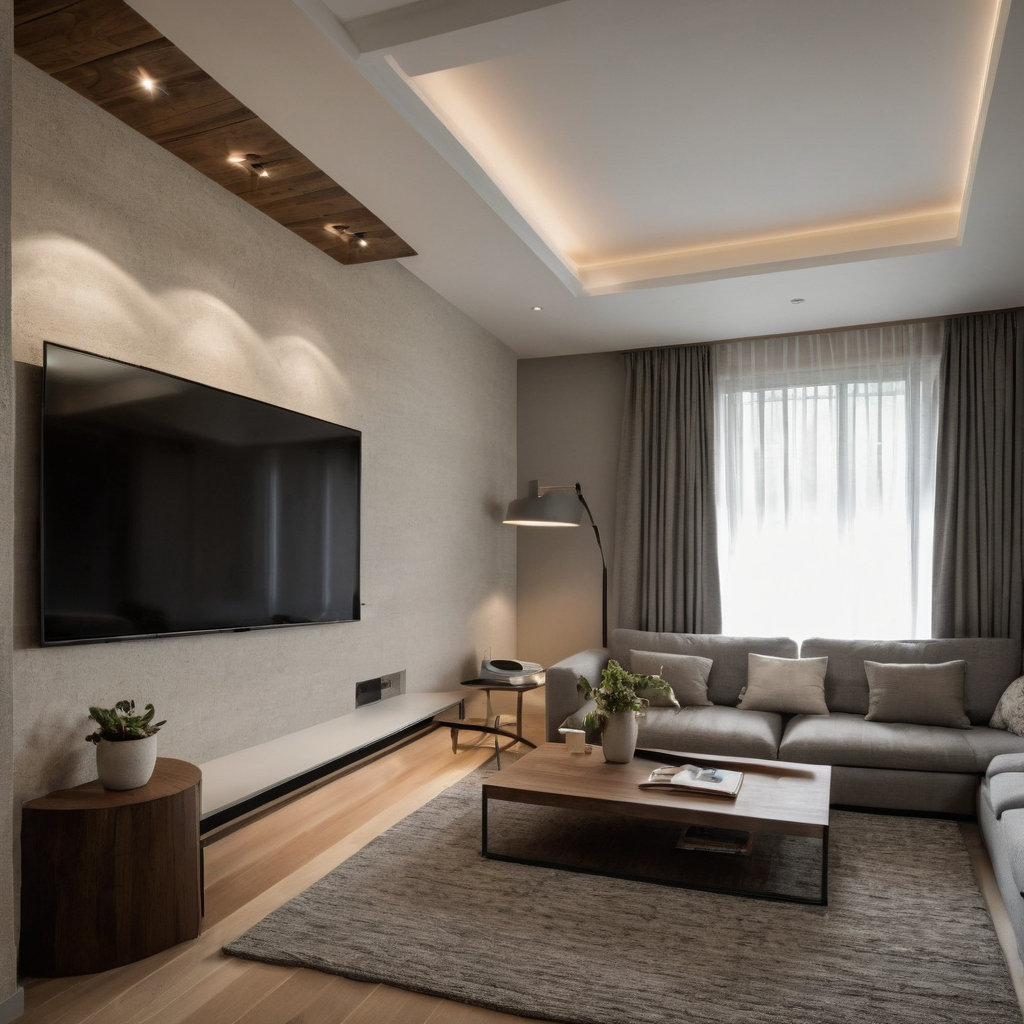
Living room decor ideas should add comfort, acoustics, lighting, and service rather than clutter shown with finish, fixture, and clearance relationships visible.
Lighting should work in layers: ambient light for general brightness, task light for reading, accent light for art or shelves, and decorative light for atmosphere. Table lamps belong beside seats where hands can reach switches. Floor lamps can sit behind sofas or beside lounge chairs, provided cords do not cross circulation routes. Furniture planning should connect with home lighting planning before lamps are chosen.
Material selection also affects comfort. The U.S. Environmental Protection Agency reports that studies have found indoor levels of several organic compounds averaging 2 to 5 times higher than outdoor levels. New cushions, finishes, adhesives, paints, and cleaning products should be sequenced with ventilation.
How do the 60-30-10 and 3-5-7 decorating rules apply without making a room formulaic?
The 60-30-10 rule is a color-distribution guideline: a dominant base, a secondary material or color, and a smaller accent. The 3-5-7 rule is a styling guideline for odd-number groupings on consoles, shelves, and coffee tables. Both rules fail when they overfill a small room, dilute a formal salon, or fight heritage architecture, monochrome interiors, maximalist rooms, and art-led schemes.
LED specification is a practical upgrade, not just an energy choice. ENERGY STAR states that qualified LED lighting uses at least 75 percent less energy and lasts up to 25 times longer than incandescent lighting. The final accessory edit should happen before procurement, because lamps, trays, ottomans, and curtains change outlet needs, delivery volume, and installation order.
A luxury living room furniture plan should be finalized before procurement, delivery, and installation
The safest sequence is to approve the measured layout before ordering furniture, rugs, lighting, and built-ins. Imported pieces, custom sofas, large stone tables, and villa-scale rugs carry delivery access, lead-time, return, and installation risks that can turn a beautiful selection into an expensive correction.
What should be checked before buying luxury living room furniture?
The pre-order check should prove that the room, the route, and the product all agree. A sofa that fits the plan but cannot pass a stair turn is a procurement failure.
- Confirm final room dimensions: wall lengths, openings, ceiling height, fireplace projection, media wall depth, floor changes, and usable rug area.
- Confirm furniture dimensions: width, depth, height, seat depth, arm height, back height, sectional orientation, recliner movement, and table overhangs.
- Confirm packaging dimensions: crate size, detachable parts, protection thickness, stone weight, and whether the item can be tilted safely.
- Confirm the delivery path: door widths, elevator size, stair width, landing depth, corridor turns, parking access, and service-entry restrictions.
- Confirm coordination points: floor boxes, lamp outlets, media cabling, rug placement, speakers, curtain stacks, HVAC grilles, and built-in joinery.
- Confirm commercial terms: lead time, deposit, cancellation window, return policy, damage inspection, fabric approval, stone sample approval, and installer responsibility.
Material maintenance should also be part of approval. For natural stone coffee tables, console tops, hearths, or built-in surfaces, the Natural Stone Institute advises cleaning with a neutral cleaner, stone soap, or mild liquid dishwashing detergent and warm water.
Which layout risks are most expensive to fix after installation?
The expensive mistakes are the ones buried inside other decisions. A misplaced floor box can force visible extension cords. A media wall set too high can make every seat uncomfortable. A sectional ordered in the wrong hand can block the best route through the room.
- Resizing a rug because the front legs miss the rug or the exposed border looks accidental.
- Moving outlets, floor boxes, sconces, or data points after built-ins and wall finishes are complete.
- Reordering custom upholstery because cushion depth, fabric behavior, or sectional orientation was approved from a showroom impression.
- Changing coffee table scale because guests cannot reach a surface without leaning forward.
- Reworking media-wall height, speaker placement, or glare control after seating distance is fixed.
Approve the measured layout, delivery route, service points, samples, and maintenance assumptions before procurement. Luxury seating should arrive as the final confirmation of a plan, not as the first test of one.
FAQ
How do you make a living room feel luxurious without making it uncomfortable?
Start with comfort measurements, then add finish. Protect 30 to 36 inches for main circulation where possible, keep coffee tables within reach, place seats close enough for conversation, and choose upholstery that suits daily use. Luxury comes from proportion, material quality, service logic, and maintenance planning.
What is the 2/3 rule for living room furniture, and when should it be ignored?
The 2/3 rule usually means a sofa should be about two-thirds the length of the wall or that a coffee table should be about one-half to two-thirds the length of the sofa. Treat it as a proportion check, not a law. Ignore it when doors, windows, circulation, media viewing, or a better conversation layout require another scale.
What is the 60-30-10 rule for living rooms?
The 60-30-10 rule assigns about 60 percent of the room to a dominant color or material, 30 percent to a secondary tone, and 10 percent to an accent. It can help coordinate living room decor ideas, but it should not override architecture, art, daylight, durable fabrics, or usable surfaces.